
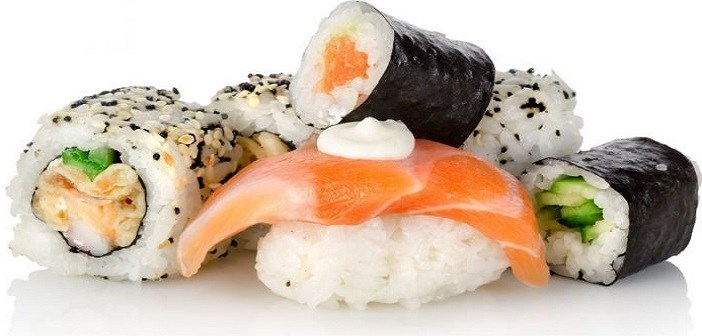
Homemade Nigiri Sushi
Almost everyone has heard of sushi, and some people avoid it because of the raw fish. Those who get past that tend to keep coming back.
This is nigiri — a hand-pressed oval of seasoned rice with fish laid over it. The simplest form, and the one that shows most clearly whether the rice was made properly.
Before anything else: the fish
This matters more than any technique in the recipe.
Use fish sold specifically for raw consumption. In the United States that is usually labeled sushi grade or sashimi grade. It is not a regulated term, so buy from a fishmonger who knows what you are asking and can tell you where the fish came from and when it was landed.
Commercially frozen is safer than fresh for raw eating. FDA guidance calls for freezing at -4°F for seven days, or -31°F for fifteen hours, to kill parasites. Most sushi-grade fish has already been through this.
Never use supermarket fish intended for cooking, and never freeze it in a home freezer and assume it is safe — domestic freezers do not get cold enough.
Cooked shrimp is a good option if you would rather not deal with raw fish at all. So is smoked salmon, or vegetable nigiri with avocado.
Serves 2, makes about 12 pieces
Ingredients
For the rice
1 cup Japanese short-grain rice
1 1/4 cups water
3 tablespoons rice vinegar
1 tablespoon granulated sugar
1 teaspoon salt
For the topping
Sushi-grade tuna, thinly sliced
Sushi-grade salmon, thinly sliced
Sushi-grade sea bass, thinly sliced
Cooked shrimp
Avocado, thinly sliced
Cucumber, thinly sliced
To serve
Soy sauce
Pickled ginger
Wasabi
Method
The rice is the dish
Japanese short-grain rice is available in most large supermarkets. If you cannot find it, use another round-grain rice — the starch content is what makes the grains cling, and long-grain rice will not work at all.
Rinse the rice in cold water, swirling with your hand, and drain. Repeat four or five times, until the water runs almost clear. This removes surface starch and it is the difference between distinct grains and porridge.
Cook the rice with the water — covered, brought to a boil, then on the lowest heat for 12 minutes, then off the heat and left covered for another 10 minutes. Do not lift the lid during cooking.
Warm the vinegar, sugar and salt together until the sugar dissolves. Let it cool.
Turn the hot rice out into a wide bowl — wooden if you have one. Pour the vinegar mixture over it and fold it through with a spatula, using cutting motions rather than stirring. Stirring crushes the grains.
Fan the rice as you fold to cool it faster. Traditionally this is done with a paper fan; anything works.
Bring it to body temperature. Not hot, not refrigerator-cold. Cold rice hardens and will not hold its shape, and hot rice cooks the fish.
Shape the nigiri
Slice the fish thinly against the grain, at a slight angle, into pieces roughly 2 1/2 inches long.
Wet your hands with water — this is essential, or the rice sticks to everything.
Take about a tablespoon of rice and press it gently into an oval in your palm. Firm enough to hold, loose enough that it falls apart in the mouth. This is the whole skill of nigiri and it takes practice.
Lay a slice of fish over the rice and press lightly to seat it.
Repeat, wetting your hands between each piece.
Serve
Arrange on a plate with the sliced avocado and cucumber alongside.
Serve with soy sauce, pickled ginger and wasabi.
Eat it the same day — ideally within the hour. Raw fish does not keep, and the rice hardens in the refrigerator.
Chef’s notes
Dip the fish side into soy sauce, not the rice side. Rice soaks up soy sauce like a sponge and the piece falls apart.
The ginger is a palate cleanser between different fish, not a topping.
If you are nervous about raw fish for a first attempt, start with cooked shrimp and avocado. The technique is identical and you will learn the rice, which is where all the difficulty is anyway.


Leave a Reply
Want to join the discussion?Feel free to contribute!