
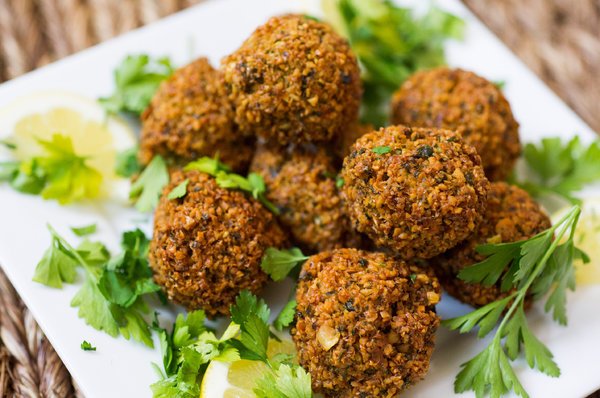
Falafel
Falafel is one of the great street foods of the Levant, and it has travelled further than almost any other Middle Eastern dish. Chickpeas, fresh herbs and dried spices — nothing animal in it, which is part of why it spread so fast as vegetarian and vegan cooking became mainstream.
There is one rule that decides whether falafel works, and it is the first step.
Never use cooked or canned chickpeas
Soak dried chickpeas overnight and use them raw. That is not a shortcut you can skip.
Raw soaked chickpeas hold together when fried and cook through into something light and crumbly. Cooked chickpeas turn to paste, the mixture will not bind, and the falafel disintegrate in the oil — this is the single most common falafel failure and it cannot be corrected with breadcrumbs or flour.
The chickpeas should be soaked 12 to 24 hours, until they have roughly doubled and you can crush one between your fingers with effort. They will still be hard. That is correct.
Serves 4, makes about 20
Ingredients
1 cup dried chickpeas, soaked overnight
1 onion, roughly chopped
2 green onions
2 jalapeños, seeded
1/2 bunch each parsley, cilantro and basil
2 tablespoons tahini
1/2 cup breadcrumbs
1 teaspoon ground cumin
1/2 teaspoon curry powder
1/2 teaspoon ground turmeric
1/2 teaspoon black pepper
1 teaspoon salt
2 tablespoons sesame seeds
Sunflower oil, for frying
Method
Drain the soaked chickpeas thoroughly and pat them dry.
Pick over the parsley, cilantro and basil and chop them roughly along with the green onions.
Halve the jalapeños, remove the seeds, and chop.
Put the chickpeas in a food processor with the onion, herbs, green onions, jalapeños, tahini, spices and salt.
Pulse rather than blend. You want a coarse, sandy texture that holds together when you squeeze it — not a smooth purée. Over-processed falafel is dense and pasty.
Scrape into a bowl and work in the breadcrumbs and sesame seeds.
Rest the mixture in the refrigerator for at least 2 hours, or overnight. This is worth doing: the breadcrumbs hydrate, the mixture firms up, and the falafel hold their shape much better in the oil.
Squeeze a handful in your fist. If it holds, it is ready. If it crumbles apart, add a spoonful more breadcrumbs.
Shape into balls or flattened patties, about the size of a walnut.
Fry
Heat sunflower oil in a deep pan to 350°F. Test with a small piece of the mixture — it should sizzle steadily and rise within a few seconds.
Fry in batches, a few at a time, for 3 to 4 minutes, until deep golden brown all over.
Do not crowd the pan. Too many at once drops the oil temperature and the falafel absorb oil instead of crisping.
Drain on a wire rack rather than paper towel.
Serve
Hot, in pita or flatbread with salad and tahini sauce.
In Lebanon and Palestine falafel is often served with a yogurt sauce — yogurt, mint and lemon whisked together. Worth making; it takes two minutes.
Some Arab countries serve falafel cold, and it is good that way too. Either works.
Chef’s note
Falafel is at its best within minutes of leaving the oil. It does not hold, and it does not reheat into anything you would recognize. Fry what you will eat and refrigerate the rest of the mixture raw — it keeps for two days and fries just as well.


Leave a Reply
Want to join the discussion?Feel free to contribute!