
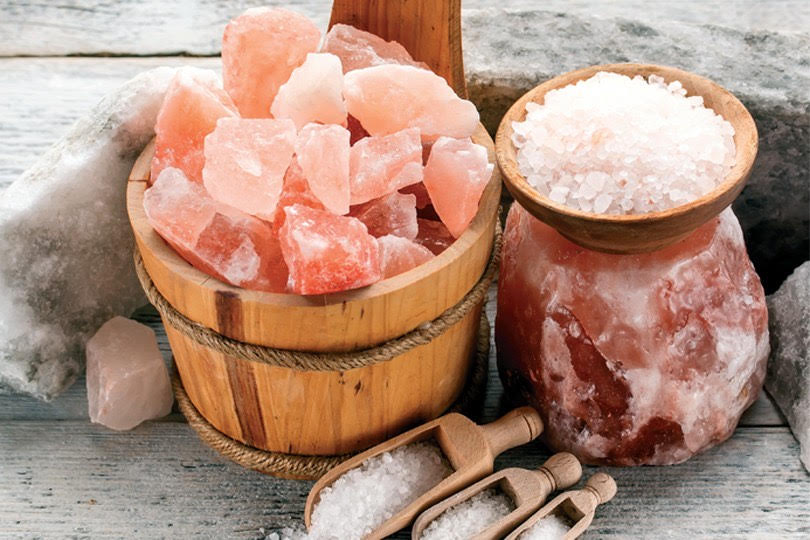
Himalayan Salt in the Kitchen
Himalayan salt is one of the more striking ingredients on a kitchen shelf — rose-pink, crystalline, and geologically remarkable.
It formed when ancient seas dried out, the salt beds were sealed under lava, and thousands of years of pressure turned them to crystal. Because those deposits sat protected underground, the salt comes out clean, untouched by modern pollution. It is mined from the Himalayan range and still cut by hand.
What it does in cooking
The pink color comes from trace minerals — iron oxide, mostly, along with small amounts of potassium, magnesium and calcium. There are said to be more than eighty in total, though they are present in very small quantities.
What those minerals do give you is a slightly rounder, less sharp flavor than refined table salt. The difference is subtle, but it is there, and it shows up most in the places where salt is the last thing you taste.
How I use it
As a finishing salt. Coarse pink crystals scattered over a grilled steak, a tomato salad, roasted vegetables or a piece of dark chocolate. You get texture and a small burst of salinity rather than uniform seasoning.
On a salt block. A slab of Himalayan salt heated on the grill or chilled in the freezer makes an excellent cooking and serving surface — thin slices of beef, shrimp or scallops season themselves as they touch it.
Not for brines or pasta water. It costs several times what kosher salt does and any nuance is lost the moment it dissolves. Use the cheap stuff where salt is just salt.
Storage
Keep it sealed, in a cool dark place. Salt draws moisture from the air, and once pink crystals clump they are difficult to work with.
A note on seasoning
Season during cooking, not only at the end. Salt added early has time to penetrate and season the food itself; salt added at the end sits on the surface. Use both — build the base seasoning as you go, and finish with a pinch of something coarse for texture.


Leave a Reply
Want to join the discussion?Feel free to contribute!