
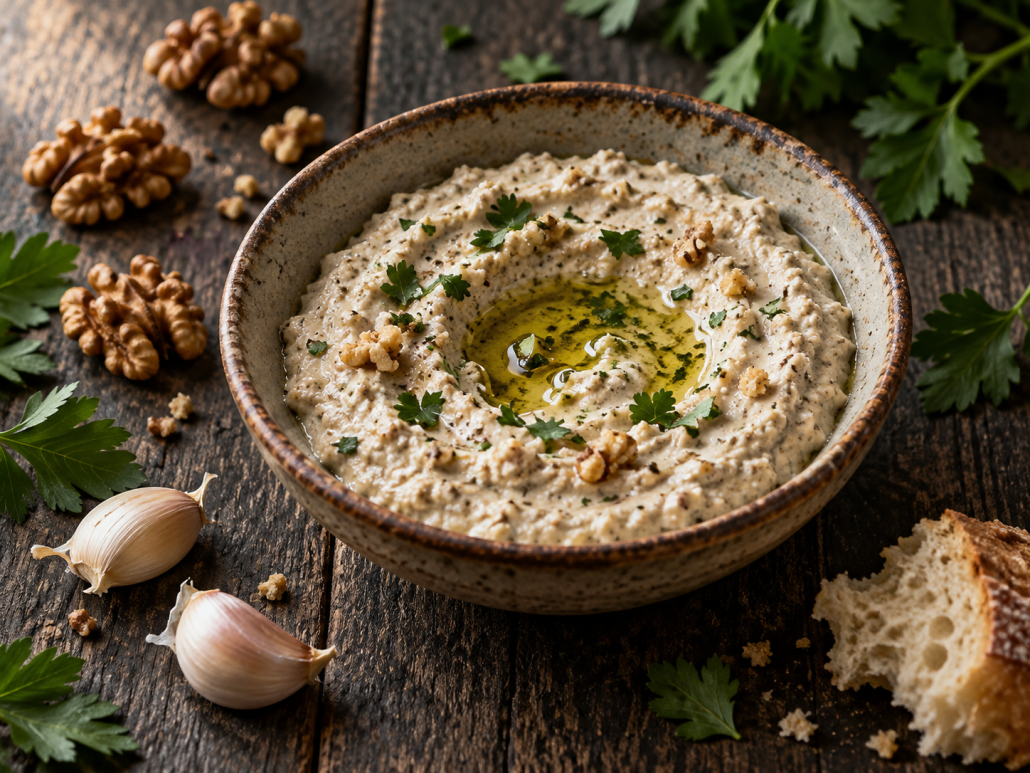
Tarator: Ottoman Walnut Sauce for Fish
There is a sauce in Turkish cooking that almost nobody outside the region knows, and it does something no other sauce does with fish. It is called tarator, and it is four ingredients: walnuts, stale bread, garlic and vinegar.
I have been cooking in Florida since 2022, and tarator is one of the few things I brought with me that needed no adaptation at all. It works with Gulf grouper the way it works with Black Sea hamsi. Some pairings travel.
What it actually is
Tarator is an Ottoman sauce with a long reach — versions of it exist across the Balkans, in Bulgaria, in Greece, in Lebanon. In Turkey it is made with walnuts and bread, thickened by the bread rather than by emulsion, and sharpened with vinegar.
You will find plenty of modern recipes that build it on tahini. Those are a different sauce. Tahini tarator is good, but it is sesame-forward and much heavier. The original is walnut and bread, and the texture is completely different — lighter, looser, more like a thick purée than a paste.
I make it the old way. No tahini.
Why it works with fish
Three things happen at once.
The walnut fat coats the palate the way an aioli does, but with none of the egg heaviness.
The vinegar cuts through it immediately, which is what you need against any fish with oil in it.
And the garlic sits in the background rather than shouting, because the bread absorbs and softens it.
That combination — fat, acid, restrained garlic — is exactly what fried fish wants. It is why tarator is served with fried mussels and fried anchovies all along the Turkish coast, and it is why it works just as well on grouper in Florida.
The recipe
Makes about 1 1/2 cups
1 cup walnuts
2 slices stale white bread, crusts removed
2–3 cloves garlic
3 tablespoons white wine vinegar
1/3 cup olive oil
1/2 cup cold water, approximately
Salt
Soak the bread in cold water for a few minutes, then squeeze it out firmly. You want it damp, not wet.
Grind the walnuts in a food processor until they break down but before they turn to butter. Stop when the processor starts to warm up — walnuts release their oil with heat and the sauce goes greasy.
Add the squeezed bread, garlic, vinegar and a good pinch of salt. Process again.
With the motor running, add the olive oil in a thin stream, then cold water a tablespoon at a time until the sauce is smooth and pourable — thick enough to coat a spoon, loose enough to spread.
Taste for salt and vinegar. Tarator should be noticeably sharp. If it tastes flat, it needs more vinegar before it needs more salt.
Rest it for at least an hour. Straight out of the processor the garlic is aggressive and the walnut has not settled; an hour in the refrigerator and it becomes one thing.
Three things I do with it on the Gulf Coast
Grouper. Gulf grouper is a firm, clean white fish with enough fat to stand up to the sauce. Fried or grilled, tarator underneath rather than over the top — the fish should stay crisp.
Shrimp. Gulf shrimp with tarator is the closest thing here to the fried mussels served with tarator on the Turkish coast. Same logic, different shellfish.
Octopus. Charred octopus with tarator and a squeeze of lemon. The smoke, the walnut and the acid work together in a way that is hard to explain and easy to taste.
Notes
Use good walnuts. Old walnuts go rancid and you will taste nothing else. Buy them whole and in small quantities; pre-chopped walnuts have usually been sitting for months.
White wine vinegar or a mild red wine vinegar. Balsamic is too sweet and too dark, and it turns the sauce muddy.
Keeps for three days in the refrigerator. It thickens as it sits — loosen it with cold water, not more oil.


Leave a Reply
Want to join the discussion?Feel free to contribute!