
How to Cook Fish Properly
Fish is leaner than red meat and carries fatty acids you will not get anywhere else. It is also the protein most people overcook, because the window between done and ruined is narrow.
Here is how I approach the main methods, and the one rule that applies to all of them.
The rule that matters most
Fish is done when the flesh just turns opaque and the flakes begin to separate when you press them. That is it.
Pull it off the heat a shade before you think it is ready. Fish carries a lot of residual heat and keeps cooking on the plate. Every dry piece of fish you have eaten was cooked thirty seconds too long.
If you want a number: 125 to 130°F at the thickest point for most white fish, 120°F for salmon and tuna if you like them pink in the middle.
Roasting
Fish roasts well anywhere between 325°F and 475°F, and the temperature you choose depends on thickness.
Thin fillets want high heat and a short time — 450°F for 8 to 10 minutes. Thick whole fish want moderate heat and longer — 350°F, allowing roughly 20 minutes per inch of thickness at the thickest point.
In a baking dish, add a small amount of liquid: wine, stock, a squeeze of lemon and some olive oil. Not enough to poach it, just enough to keep the pan from drying out.
Cooking in a clay pot or casserole
Layer vegetables both under and over the fish. The ones underneath lift it off the hot base, the ones on top shield it from direct heat. The fish steams between them.
En papillote
Wrapping fish in parchment is the most forgiving method there is. It cooks in its own steam, and nothing escapes — moisture, aroma or flavor.
Fold the paper into a sealed parcel with the fish, a little oil, aromatics and a splash of wine or lemon. Bake at 400°F. The parcel should puff up; if it does not, the seal has failed.
Serve it in the paper and let people open their own. The steam that comes out is half the pleasure.
Grilling
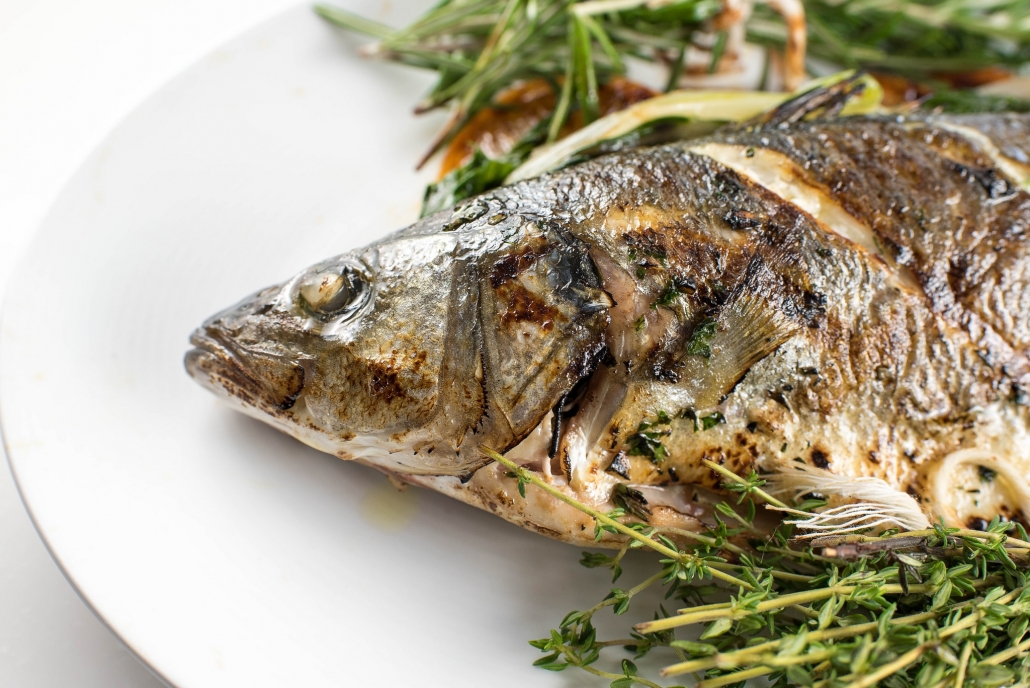
Score the skin on both sides of a whole fish with two or three shallow cuts. This lets heat into the thickest part and stops the skin from contracting and curling as it tightens.
Brush the fish with oil, not the grill. Then get the grill properly hot before the fish goes on — a hot surface releases the skin, a warm one glues it down.
Do not turn it early. Leave it until the skin lifts away on its own, which is usually 4 to 5 minutes for a fillet. If you have to force it with the spatula, it is not ready.
Steaming and poaching
Delicate white fish and thin fillets suit this best.
Use a pot with a lid. The lid is the whole technique — trapped steam keeps the fish moist and cooks it gently.
Add vegetables, herbs and a little wine to the liquid underneath and the fish takes on all of it.
Two more things
Take fish out of the refrigerator 15 minutes before cooking. Cold fish cooks unevenly — the outside overcooks while the center comes up to temperature.
Dry the surface thoroughly with paper towel before any dry-heat method. Wet fish steams instead of browning, and you lose the crust entirely.


Leave a Reply
Want to join the discussion?Feel free to contribute!